





Introduction
Pregnancy can make even a simple bottle of moisturizer raise a question: “Is this actually safe for my baby?”
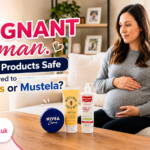
If you already use NIVEA, Burt’s Bees, or Mustela, you don’t necessarily need to throw everything in your bathroom cabinet away. Most ordinary moisturizers and cleansers are not automatically dangerous during pregnancy. The more useful approach is to look at the specific product and its ingredients, because a brand can make dozens of formulas with very different ingredients.
So, are NIVEA products safe compared with Burt’s Bees or Mustela?
Generally, many basic NIVEA, Burt’s Bees, and Mustela skincare products can be suitable during pregnancy. But no entire brand can honestly be labeled “pregnancy-safe” across every product. Some formulas contain ingredients that pregnant women are advised to avoid, while others are simple moisturizers designed mainly to hydrate and protect the skin.
That distinction matters much more than whether a product is marketed as “natural,” “baby-friendly,” or specifically for pregnancy.
Quick Answer: Which Brand Is Safest During Pregnancy?
If you’re choosing among the three, Mustela has the clearest pregnancy-specific positioning, particularly its maternity range. Burt’s Bees also has products specifically designed for pregnancy, such as Mama Belly Butter. NIVEA has many straightforward moisturizing products, but its overall range is much broader, including anti-aging products that can contain retinol.
Mustela’s maternity products are specifically developed for pregnancy and postpartum use. For example, its current Maternity Essential Care Multi-Purpose Lotion is described by the company as safe for mom and baby, fragrance-free, and tested under dermatological and gynecological control.
Burt’s Bees Mama Belly Butter is likewise specifically formulated for pregnancy and contains ingredients such as sunflower oil, coconut oil, sweet almond oil, shea butter, soybean oil, jojoba butter, cocoa butter and vitamin E.
NIVEA isn’t inherently unsafe during pregnancy. The issue is that you need to choose the formula carefully. NIVEA itself notes that some of its products contain retinol and specifically says retinol should not be used during pregnancy.
So, if you want the simplest answer:
For pregnancy-specific body care: Mustela is the easiest choice to evaluate.
For pregnancy-specific moisturizing: Burt’s Bees Mama products can be reasonable options.
For everyday basic moisturizing: Many NIVEA products may be fine, provided the individual formula doesn’t contain an ingredient you have been advised to avoid.
For acne, anti-aging, pigmentation, or treatment products: Don’t choose based on brand name alone. Check the active ingredients.
Why the Ingredient List Matters More Than the Brand
Pregnancy skincare is often discussed as if there is a magic list of “safe brands” and “unsafe brands.” Real life isn’t that simple.
A company can sell a plain body lotion beside an intensive anti-aging cream. One may contain mostly moisturizers and emollients; the other may contain an active ingredient that isn’t recommended during pregnancy.
The American Academy of Dermatology recommends checking skincare labels during pregnancy and specifically advises avoiding retinoids, including prescription retinoids and over-the-counter retinol products. Hydroquinone is another ingredient it recommends avoiding.
That’s why comparing NIVEA with Burt’s Bees or Mustela isn’t really a brand-versus-brand safety contest. You’re comparing individual formulas.
There’s another reason this matters: pregnancy can make skin more sensitive. Hormonal changes may contribute to dryness, acne, melasma and irritation, so a product you’ve used comfortably for years may suddenly sting or cause redness. Dermatologists generally recommend keeping pregnancy skincare relatively simple: cleanse, moisturize and protect your skin from the sun.
NIVEA During Pregnancy: What Should You Know?
NIVEA makes a huge variety of products, from basic body lotions to facial treatments and anti-aging formulas.
For ordinary hydration, the ingredients you’re likely to encounter in conventional moisturizers can include emollients such as shea butter, squalane and caprylic/capric triglyceride. NIVEA’s ingredient information also identifies panthenol, a form of vitamin B5 commonly used for soothing and hydration.
Those types of moisturizing ingredients aren’t the main pregnancy concern.
The important exception is retinol.
NIVEA currently has products containing retinol, and the company’s own ingredient guidance states that retinol should not be used during pregnancy because it could potentially harm the developing fetus.
So don’t look at a NIVEA bottle and think, “NIVEA is safe,” or “NIVEA isn’t safe.”
Instead, ask:
What exactly is in this NIVEA product?
If it’s a straightforward moisturizer without retinoids or another ingredient your doctor has told you to avoid, it may be perfectly reasonable. If it’s an anti-aging or treatment formula, read the label more carefully.
What About Burt’s Bees?
Burt’s Bees appeals to many people during pregnancy because of its emphasis on ingredients of natural origin. But “natural” shouldn’t automatically be interpreted as “proven safe for every pregnant woman.”
Burt’s Bees says that its product pages provide detailed ingredient lists, and its packaging uses INCI ingredient names. That’s useful because you can evaluate the actual formula instead of relying on marketing language.
Its Mama Belly Butter is a good example of a product specifically made for pregnancy. The current formula includes plant oils and butters and doesn’t list retinoids among its ingredients.
However, Burt’s Bees also sells skincare products for acne and other concerns. Some contain salicylic acid or ingredients derived from plants that have exfoliating properties. For example, one current Burt’s Bees acne scrub uses willow bark extract and states that the formula contains 1% salicylic acid.
That doesn’t mean you should panic if you’ve used such a product. Pregnancy recommendations depend on the ingredient, concentration, amount used, body area and frequency.
The American Academy of Dermatology recommends discussing or limiting high-dose salicylic acid during pregnancy, while MotherToBaby notes that ACOG has suggested certain over-the-counter topical acne ingredients, including salicylic acid, glycolic acid, benzoyl peroxide and azelaic acid, may be used when needed.
The practical lesson is simple: Burt’s Bees being “natural” doesn’t remove the need to read the label.
Why Mustela Is Different
Mustela has an advantage if your priority is finding products specifically created around pregnancy and maternity skincare.
Its maternity collection includes products intended for changing skin during pregnancy and postpartum. The company’s current Maternity Essential Care Multi-Purpose Lotion is fragrance-free and contains ingredients such as glycerin, sunflower seed oil, aloe vera and passion fruit-derived ingredients. Mustela says the product is tested under dermatological and gynecological supervision.
Its fragrance-free stretch-mark cream is another example. The listed ingredients include glycerin, shea butter, avocado oil, vitamin E and natural plant-derived ingredients.
That doesn’t mean Mustela is magically safer than every NIVEA or Burt’s Bees product. Rather, Mustela makes it easier for a pregnant shopper to find products designed specifically around maternity skincare needs.
That’s a meaningful difference.
NIVEA vs. Burt’s Bees vs. Mustela
| Brand | Pregnancy-specific options | What to like | What to watch |
|---|---|---|---|
| NIVEA | Some, but broad skincare range | Many simple moisturizers and body-care products | Check anti-aging/treatment formulas for retinol and other actives |
| Burt’s Bees | Yes, including Mama products | Pregnancy-focused body products and many plant-derived formulas | “Natural” doesn’t automatically mean pregnancy-safe; some skincare contains salicylic acid |
| Mustela | Strong focus on maternity and baby skincare | Dedicated pregnancy products, including fragrance-free options | Still check the exact ingredient list, especially if you have sensitive skin |
If your main goal is belly and body moisturization, Mustela and Burt’s Bees have particularly obvious pregnancy-focused choices.
If you already own NIVEA and it’s simply a basic moisturizer, there’s no reason to assume you must stop using it merely because you’re pregnant.
Ingredients Pregnant Women Should Pay Particular Attention To
You don’t need a chemistry degree to check a skincare label. A few ingredient categories deserve special attention.
Retinoids and retinol
This is the big one.
Retinoids include ingredients related to vitamin A. The AAD advises avoiding topical retinoids during pregnancy.
MotherToBaby explains that topical tretinoin is absorbed much less than oral isotretinoin, but because some absorption can occur, avoiding topical tretinoin during pregnancy is considered the safest approach.
Look for terms such as:
Retinol
Retinal
Tretinoin
Adapalene
Tazarotene
Other retinoid/vitamin-A derivatives
If you see one of these on a product you’re planning to use during pregnancy, check with your obstetrician or dermatologist rather than guessing.
Hydroquinone
Hydroquinone is used for skin lightening and pigmentation. The AAD recommends avoiding it during pregnancy.
This is particularly relevant if pregnancy has caused melasma or darker patches. Don’t assume that a stronger brightening cream is better simply because pigmentation has appeared.
High-strength salicylic acid
Salicylic acid is more nuanced.
Low amounts used appropriately in topical products are not treated the same way as high-dose applications. MotherToBaby says ACOG has suggested some OTC topical acne products containing salicylic acid may be used during pregnancy when needed, while the AAD advises limiting high-dose salicylic acid and discussing it with a dermatologist.
So there’s no need to fear the word “salicylic acid” on every label, but don’t start a strong acne treatment without checking first.
Fragrance and essential oils
These are usually more of a skin-tolerance issue than a simple pregnancy-safety label.
Pregnancy can make your skin more reactive, and fragrances can irritate sensitive skin. The AAD recommends looking for fragrance-free products when possible, particularly if you’re dealing with irritation or eczema.
Burt’s Bees notes that many of its fragrances are naturally derived from essential oils and extracts. “Naturally derived” doesn’t necessarily mean your skin will tolerate it better.
If your skin is suddenly itchy, dry or reactive, fragrance-free is often the simpler choice.
A Simple Pregnancy Skincare Routine
You don’t need a ten-step routine while pregnant.
A practical routine can look like this:
Morning
Use a gentle cleanser if you need one.
Apply a simple moisturizer.
Use broad-spectrum sunscreen.
The AAD recommends broad-spectrum, water-resistant SPF 30 or higher and says physical sunscreens containing zinc oxide or titanium dioxide can be useful during pregnancy, particularly for minimizing irritation.
Evening
Cleanse gently.
Apply moisturizer.
Use pregnancy-compatible treatment products only if you actually need them.
For your belly, hips and thighs, a plain moisturizing cream or pregnancy-specific body lotion is generally a more sensible focus than buying an aggressive “stretch-mark treatment.”
One important reality: moisturizing can help keep stretching skin comfortable and supple, but no cream can guarantee that you’ll avoid stretch marks.
Expert Insight: Don’t Let “Pregnancy-Safe” Marketing Do the Thinking for You
The most useful way to shop for skincare during pregnancy is to reverse the usual process.
Don’t start with:
“Which brand is safest?”
Start with:
“What does my skin need, and what ingredients are in the product?”
If your skin is simply dry, you probably don’t need an anti-aging serum, exfoliating treatment and several active ingredients. A basic cleanser and moisturizer may be enough.
If you’re struggling with acne, melasma or severe irritation, that’s different. Those conditions may require targeted treatment, and pregnancy changes which medications and ingredients are appropriate.
There’s also no reason to replace every product you own the day you get a positive pregnancy test. Topical products generally have much lower systemic exposure than medicines taken by mouth, although absorption can increase when products are applied to broken or irritated skin, over large areas, or more frequently.
If you’ve already used a product containing a questionable ingredient before realizing you were pregnant, don’t automatically assume something has gone wrong. Stop and discuss the specific product and exposure with your obstetrician or pharmacist. For certain ingredients, the actual exposure matters considerably.
Common Mistakes to Avoid
Assuming “natural” means safe.
Plant extracts and essential oils can still irritate skin, and natural ingredients aren’t automatically better studied in pregnancy.
Assuming an entire brand is safe.
NIVEA, Burt’s Bees and Mustela all sell multiple product types. The formula matters.
Stopping moisturizer because you’re worried about ingredients.
Dry, irritated skin often benefits from regular moisturizing. Dermatologists commonly recommend moisturizers during pregnancy, especially for eczema and dryness.
Starting strong acne or pigmentation treatments without checking.
Pregnancy isn’t the time to experiment with retinoids or high-strength exfoliating treatments.
Forgetting sunscreen.
Pregnancy-related pigmentation can become more noticeable with sun exposure, so sun protection deserves a place in your daily routine.
Final Takeaway
If you’re pregnant and choosing between NIVEA, Burt’s Bees and Mustela, there isn’t one brand that wins for every skincare need.
Mustela is probably the most straightforward choice if you specifically want maternity skincare because its pregnancy range is designed around the needs of expecting mothers. Burt’s Bees has useful pregnancy-specific options such as Mama Belly Butter, but its wider skincare range still needs to be checked ingredient by ingredient. NIVEA can also be perfectly reasonable for basic moisturizing, but its broad product range includes retinol-containing products that should be avoided during pregnancy.
The safest habit is therefore not “buy brand X.”
It’s read the ingredient list, keep your routine simple, and ask your obstetrician or dermatologist about anything containing an active treatment ingredient.
If you’re pregnant and have a specific NIVEA, Burt’s Bees or Mustela product at home, the exact ingredient list is much more useful than the brand name alone.
Visit also : buzzmax.co.uk
Is NIVEA moisturizer safe during pregnancy?
Many basic NIVEA moisturizers may be suitable during pregnancy, but it depends on the exact formula. NIVEA also sells products containing retinol, and the brand advises that retinol should not be used during pregnancy. Check the ingredient list before using a particular product.
Is Burt’s Bees safer than NIVEA during pregnancy?
Not automatically. Burt’s Bees has pregnancy-specific products such as Mama Belly Butter, while NIVEA has many basic moisturizers that may also be suitable. Safety depends more on the individual ingredients than on the brand’s overall reputation.
Is Mustela the best skincare brand for pregnancy?
Mustela is one of the easiest brands to shop from if you specifically want maternity skincare because it has a dedicated pregnancy and postpartum range. However, “best” depends on your skin type, concerns and the particular product you’re considering.
Can I use NIVEA body lotion while pregnant?
A basic moisturizing body lotion may be suitable, but check the ingredients of your exact product. Avoid products containing retinoids or other ingredients your healthcare provider has advised you not to use during pregnancy.
Can I use Burt’s Bees Mama Belly Butter while pregnant?
Burt’s Bees specifically markets Mama Belly Butter for use during pregnancy. Its current ingredient list includes moisturizing oils and butters and does not list a retinoid.
What skincare ingredients should I avoid during pregnancy?
The AAD recommends avoiding retinoids and hydroquinone during pregnancy. High-dose salicylic acid should be used cautiously and discussed with a healthcare professional.
Is fragrance-free skincare better during pregnancy?
Fragrance-free products can be a sensible choice if pregnancy has made your skin sensitive or irritated. Fragrance isn’t automatically dangerous, but it can trigger irritation in some people. The AAD recommends fragrance-free products when trying to reduce irritation.
What should I do if I used retinol before realizing I was pregnant?
Don’t panic. Stop using the retinol product and tell your obstetrician or dermatologist what you used, including the product name and how often you applied it. Topical exposure is different from taking an oral retinoid, and a healthcare professional can assess your particular exposure and provide appropriate advice.