







Introduction
If you’ve watched Stranger Things, the Mind Flayer is one of those villains that seems simple at first and becomes much stranger the more you learn about it. It began as a terrifying shadow looming over Hawkins, then became connected to Will Byers, Billy, the Upside Down, Vecna, and eventually the larger mythology behind the entire series.
And now that Stranger Things has finished its fifth and final season, there’s finally a clearer answer to one of the show’s biggest mysteries: what exactly is the Mind Flayer, and how does it fit into the story?
This article contains major spoilers for all five seasons.
Quick Answer: What Is the Mind Flayer?
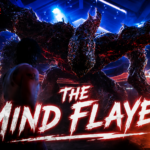
The Mind Flayer is a powerful interdimensional entity in Stranger Things, recognized by its enormous spider-like or shadow-monster appearance. The characters originally give it the name “Mind Flayer” because they compare the creature to the monster of the same name from Dungeons & Dragons.
Across the series, the Mind Flayer can control living creatures, communicate through psychic connections, possess humans, organize other creatures, and create physical forms in the real world.
Its relationship with Vecna becomes especially important. Season 5 reveals that young Henry encountered Mind Flayer particles inside a mysterious rock, after which the particles possessed him. Henry ultimately embraced the Mind Flayer’s worldview rather than rejecting it. The finale leaves some ambiguity about whether Henry originally chose this path freely or was influenced from the beginning, but by the end he knowingly remains on the Mind Flayer’s side.
By the series finale, however, the Mind Flayer is defeated and killed.
How the Mind Flayer Entered Stranger Things
The Mind Flayer’s first major appearance comes in Season 2, although the characters don’t immediately understand what they’re seeing.
Will Byers has returned from the Upside Down, but something is clearly wrong. He experiences disturbing visions and becomes connected to a gigantic shadow creature. Dustin, Mike, Lucas, and the others eventually identify the creature as the Mind Flayer, borrowing the name from their favorite tabletop game.
The comparison makes sense from their perspective. In D&D, a mind flayer is an alien-like creature associated with psychic powers and control over other beings. The Stranger Things monster isn’t literally the same creature, though. It’s a separate creation of the television series.
Netflix’s own Season 2 recap explains that Will’s connection to the creature becomes so strong that he can feel its pain. The group eventually discovers that heat can drive the Mind Flayer out of Will’s body. Joyce, Jonathan, and Nancy use extreme heat at Hopper’s cabin, forcing the creature’s particles out of him.
That should have been the end of it.
It wasn’t.
The Mind Flayer and Will Byers
Will is arguably the character most closely connected to the Mind Flayer during the early seasons.
After being trapped in the Upside Down, Will becomes unusually sensitive to the supernatural world. In Season 2, the Mind Flayer uses him as a host and gains access to information through him.
The frightening part isn’t simply possession. Will can actually sense the creature.
That creates an unusual relationship between hero and villain. Will isn’t just fighting a monster outside his body; he’s trying to separate his own thoughts, memories, and emotions from something that has invaded his mind.
The connection also becomes useful to the Hawkins group. Will can sometimes tell when the Mind Flayer is nearby, giving the others information they otherwise wouldn’t have.
His experience with the creature also becomes important thematically later in the series. Will and Henry/Vecna both encounter supernatural forces that shape them, but their choices take them in completely different directions.
What Happened to the Mind Flayer in Season 3?
Season 3 changes the Mind Flayer dramatically.
After being forced out of Will, its particles remain trapped on the Hawkins side of the dimensional barrier. The creature begins building a physical form using living matter.
Rats are among its first victims. They consume chemicals, become infected, and eventually explode. The remains are gathered into a grotesque mass that becomes a physical version of the Mind Flayer.
The creature then targets humans.
Billy Hargrove becomes its most important human host, and the Mind Flayer uses him to recruit others. Soon, multiple people in Hawkins are under its influence. Netflix describes the Season 3 monster as a physical manifestation formed from the remains of the infected rats, while Billy becomes the first major human it takes over.
This version of the Mind Flayer is much more physical than the shadow creature from Season 2. It can chase people, attack them directly, regenerate, and reshape its body.
The Battle of Starcourt eventually brings the conflict to a head. Billy breaks free of the creature’s control long enough to protect Eleven, while Joyce and Hopper’s efforts to close the Russian gate cut the Mind Flayer off from the Upside Down.
The physical monster dies.
But the larger threat doesn’t disappear.
Is the Mind Flayer the Same as Vecna?
This became one of the biggest questions after Season 4.
The answer is complicated.
Season 4 reveals that Henry Creel, later known as Vecna or One, is deeply connected to the Upside Down and its monsters. The season shows Henry shaping the strange particles into the spider-like form associated with the Mind Flayer.
For a while, that led many viewers to interpret the Mind Flayer as essentially Vecna’s creation and servant.
Season 5 adds another layer.
The final season reveals that young Henry encountered Mind Flayer particles in a rock found inside a mysterious briefcase. The particles then possessed him, and Henry became connected to the entity.
However, Henry isn’t presented as a helpless puppet forever. He eventually accepts the Mind Flayer’s philosophy and chooses its side.
That’s why the relationship between them is more interesting than a simple “master and servant” explanation.
Netflix’s Season 5 finale breakdown specifically says the creators wanted to leave some uncertainty about whether young Henry chose this path himself or whether the Mind Flayer controlled him from the beginning. What matters by the end is that Henry ultimately chooses to remain loyal to it.
So, if you’re asking “Who controls whom?”, the most accurate answer is: the show deliberately makes that question complicated, but Henry ultimately embraces the Mind Flayer rather than turning against it.
What Are the Mind Flayer’s Powers?
The Mind Flayer is dangerous because its abilities aren’t limited to physical strength.
Its major abilities include:
Possession: It can take control of living beings, including humans.
Psychic influence: It can communicate and operate through mental connections.
Hive-like control: Infected creatures and people can act as parts of a larger network.
Physical transformation: Its particles can assemble into physical bodies.
Control of other creatures: Demogorgons, Demodogs, and other organisms are connected to the broader supernatural network.
Regeneration and reshaping: Its physical manifestations can change form and survive serious physical attacks.
Dimensional influence: Its power extends across the boundary between Hawkins and the other dimensions.
Its greatest strength, though, is arguably coordination. The Mind Flayer rarely operates like an ordinary monster that simply hunts one person at a time. It turns individuals into extensions of itself.
That’s what makes its threat feel larger than its physical size.
Why Does the Mind Flayer Look Like a Spider?
The spider imagery isn’t accidental.
Henry has a long-standing fascination with spiders, and that obsession becomes part of the visual language surrounding Vecna and the Mind Flayer.
The giant spider-like shape also fits the creature’s personality. Spiders don’t simply attack from the open. They create networks, wait, trap prey, and control territory.
The Mind Flayer works in a similar way.
It creates connections between creatures, spreads its influence, and turns its victims into parts of a much larger system.
That makes the spider form more than a scary design choice. It reflects the way the villain operates.
The Mind Flayer in Season 5
Season 5 finally brings the Mind Flayer’s story to its conclusion.
The Hawkins group enters the Abyss and discovers the Pain Tree. What first appears to be a strange tree eventually reveals its true identity: the Pain Tree is the Mind Flayer itself.
The creature becomes a massive physical threat during the final battle. While Eleven confronts Henry within the Mind Flayer’s body, the rest of the group attacks the monster from the outside. Nancy acts as bait, Jonathan and Robin attack from above, and Dustin and Steve target its vulnerable egg sacs.
The group succeeds.
The Mind Flayer is killed in the series finale.
That distinction matters because earlier victories over the creature were never quite final. Season 2 separated it from Will. Season 3 destroyed its physical manifestation in Hawkins. But Season 5 is where the story finally treats the Mind Flayer as defeated.
The larger dimensional threat is also dealt with when Hopper and Murray set a bomb to destroy the interdimensional bridge connecting Hawkins to the Upside Down.
The Mind Flayer vs. the D&D Mind Flayer
There’s an easy source of confusion here.
The Mind Flayer in Stranger Things gets its name from Dungeons & Dragons, but the two creatures aren’t the same character.
In D&D, mind flayers are also called illithids. They’re aberrations known for psychic abilities, telepathy, domination, and their distinctive tentacled faces. The standard fifth-edition mind flayer is a formidable monster with abilities such as Mind Blast, Detect Thoughts, and Dominate Monster.
The Stranger Things characters use D&D names as a way to describe supernatural creatures they don’t fully understand.
That’s why the Demogorgon, Mind Flayer, and Vecna all have names that sound familiar to D&D players even though their television versions have their own mythology.
It’s one of the smartest recurring ideas in the show: the kids use the fictional world they understand to explain a real supernatural world they don’t.
Expert Insight: Why the Mind Flayer Works So Well as a Villain
The Mind Flayer is most effective when you don’t think of it as just a giant monster.
Its real horror comes from loss of control.
The Demogorgon can kill you. Vecna can invade your mind. But the Mind Flayer can make you question whether the person standing beside you is still themselves.
That’s especially clear with Will and Billy.
Will fights to get his identity back. Billy briefly succeeds in breaking free. Other hosts aren’t so fortunate.
This gives the creature a psychological role in the story. It’s a representation of influence becoming so powerful that individuality begins to disappear.
Season 5 then gives that idea a final twist through Henry. The question isn’t simply whether the Mind Flayer controls people. It’s whether someone can recognize the darkness influencing them and still choose to embrace it.
Will does one thing.
Henry does another.
That contrast helps explain why their stories remain connected all the way to the finale.
Final Takeaway
The Mind Flayer started as one of Stranger Things‘ most mysterious monsters: a huge shadow looming over Hawkins and controlling Will from another dimension. Over the following seasons, it became a physical creature, a possessor of humans, and one of the central pieces of the show’s mythology.
Season 5 finally gives the story its ending. The Mind Flayer is revealed through the Pain Tree, the Hawkins crew fights it directly, and the creature is killed. Its relationship with Henry/Vecna remains intentionally more complicated than a simple villain hierarchy, with the finale making clear that Henry ultimately chooses to stand with the Mind Flayer.
That complexity is what makes the character memorable. The Mind Flayer isn’t frightening merely because it’s enormous or powerful. It’s frightening because it turns connection into control—and for much of Stranger Things, the characters have to fight not only to survive the monster, but to remain themselves.
Visit also : buzzmax.co.uk
What is the Mind Flayer in Stranger Things?
The Mind Flayer is a powerful supernatural entity connected to the Upside Down’s wider mythology. It can possess living beings, influence minds, and operate through a network of creatures and hosts.
Who defeated the Mind Flayer?
The Hawkins group defeats the Mind Flayer together during the Season 5 finale. The final battle requires multiple characters to contribute rather than relying on one hero.
What happened to the Mind Flayer after Season 3?
Its physical manifestation in Hawkins was defeated when the gate beneath Starcourt Mall was closed, but the larger threat wasn’t permanently eliminated at that point.
Does the Mind Flayer control Vecna?
Season 5 makes their relationship deliberately ambiguous. Henry is exposed to Mind Flayer particles and ultimately chooses to embrace the entity’s worldview and remain on its side.
Is the Mind Flayer based on a real creature?
No. It is a fictional monster created for Stranger Things, although its name was inspired by the mind flayer creature from Dungeons & Dragons.
What is the Mind Flayer’s biggest weakness?
In Season 2, heat is shown to be particularly harmful to the Mind Flayer’s influence over Will. Later seasons show that physically attacking its manifestations and severing dimensional connections can also be effective.
Is the Mind Flayer stronger than the Demogorgon?
The creatures serve different roles, so a simple strength ranking isn’t particularly useful. The Mind Flayer is presented as a higher-level controlling force capable of influencing other creatures rather than simply functioning as another monster like the Demogorgon.
Does the Mind Flayer appear in the Stranger Things finale?
Yes. The Mind Flayer plays a major role in the final battle and is ultimately killed during the series finale.